

After four generations, the CleverMax apparel hanger system passes High-Tech Product certification
In 2014 the CleverMax apparel hanger system passed High-Tech Product certification under certificate 140611G0341N, a review concerned less with how a product sells than with who settled its technical approach. Across the eleven years from the first generation to the fourth, each generation took on the half of the problem its predecessor had left standing, while the data backbone all four share came out of a partnership with the CAS Institute of Software that began in 2005.
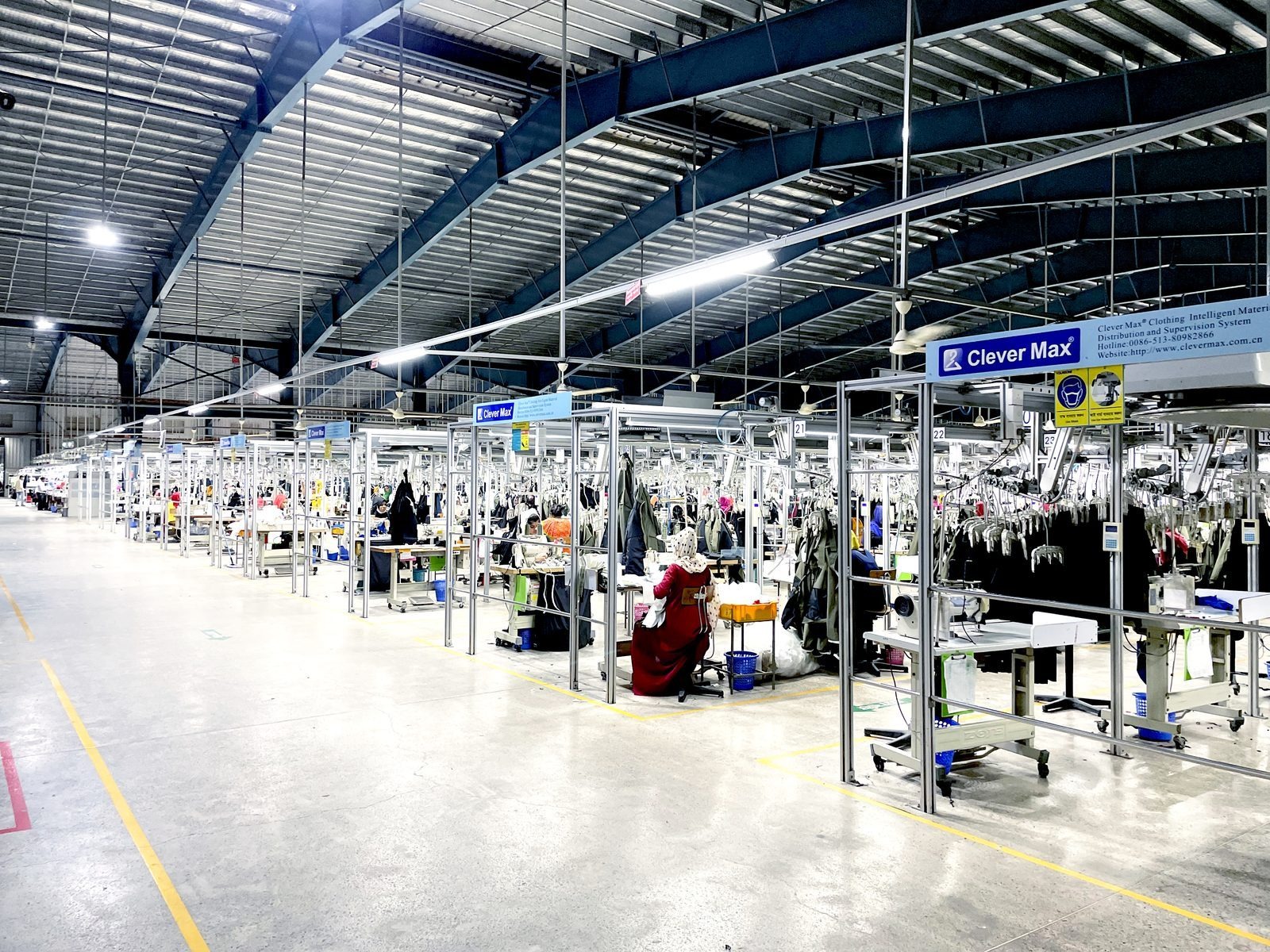
In 2014 the CleverMax apparel hanger system passed High-Tech Product certification, apparel product certificate number 140611G0341N.
A review of this kind asks fairly specific questions. Which core technologies does the product rely on, who settled the technical approach, who holds the patents, and can any of it be traced to a verifiable source. How well the product sells is not among them.
Four generations, each clearing up the half its predecessor left
The first generation, in 2003, did exactly one thing: it took work in progress out of people's arms. Before it, a sewing operator finished a bundle, stood up, carried it to the next station, found somewhere to set it down, walked back and sat down again. Handing that journey to the hanger system meant an operator stayed at the machine and did nothing but her own operation.
Solving the carrying left the accounting untouched. Material now moved on its own, but where a particular piece had got to, and how long it had sat at a given station, was something nobody on the floor could say. The first generation worked off barcodes, which a person had to scan piece by piece with a gun, and on a busy shift scans get missed, after which that piece drops out of the record for good. Where two lines merged the problem was worse, because a scan could not tell which of the two a piece had arrived from.
That was the half the second and third generations took on. In 2005 CleverMax entered an industry-academia partnership with the CAS Institute of Software and brought RFID into the hanger system, which removed identification from human hands altogether. Automatic identification, real-time tracking and merge management were settled in a single move, so that the location and dwell time of every piece entered the system continuously with nobody keying anything in.
With the data backbone standing, the range of goods that could go on a line was still limited to clothing. A shirt weighs one or two hundred grams against four or five kilos for a winter duvet, and none of the apparel numbers for steel section, carrier grip or the envelope a piece sweeps through on a bend would stretch that far. The fourth generation redrew the mechanics for heavy loads and went into a home-textile workshop in 2008, which made CleverMax one of the few Chinese suppliers covering apparel and home textiles both.
By the time this certification came through in 2014, every technology across the four generations that could be put up for review had been built out one generation at a time over those eleven years.
The core technology has a traceable origin
The technical approach the review had to verify is set out in "A monitoring method and system for intelligent material distribution", patent CN100493401C, filed in 2006 by CleverMax's partner the CAS Institute of Software and granted by the China National Intellectual Property Administration in 2009.
The method it fixes is this: an RFID tag on the carrier, a reader at each station entry, automatic reading as the carrier passes, the host deciding in real time whether the piece enters, and a PLC controlling the gate precisely.
What matters in that arrangement is not the reader but the fact that the route map lives on the carrier. A carrier arrives carrying its own list of stations to visit and stations to skip, leaving each station to recognise it and decide whether to admit it. That is why the fifth generation could later run dozens of orders on one line by changing what gets written to a carrier rather than by rebuilding the central controller. Everything downstream of it, the intelligent scheduling, the flexible production, the analytics, can only compute on what this layer captures by itself.
Where the captured data goes next
Captured data stayed on the line at first, which meant a supervisor who wanted to see it walked over to the screen at the end of the rail.
The YunDao cloud MES platform, released in 2011, fed that live data back into production scheduling. How much work in progress remained, how far each operation had got, how long a piece took to move between stations, all of it once scattered across paper tickets and a supervisor's memory, became figures the scheduler could query and work from in an office. The line between selling equipment and delivering a solution sits there. Equipment gets a piece to a station. A solution also has to give the person doing the scheduling something to decide on.
By 2014 this apparel line had been running in customer factories in China and abroad for eleven years. Apparel is the oldest and most settled application for hanger systems, and how much process understanding and how many site parameters eleven years accumulates is only discoverable by trying them one at a time on somebody else's floor.
After the certificate
The home-textile hanger system passed the same certification in 2016 under certificate number 160611G0224N. Two certificates were issued separately because the review treated apparel and home textiles as two product lines.
The fifth-generation flexible hanger line followed in 2017, running dozens of different orders on a single line without tangling them, aimed at the scheduling difficulty garment plants faced once batches shrank, styles multiplied and lead times contracted.
In 2019 the cutting and sorting ends were brought in, which finally joined the chain up from cut piece to packing.
The certificate names one generation out of four. What it confirms is the line running unbroken between them, from the first generation taking material out of an operator's arms, through the second and third taking identification out of her hands, to the fourth widening the range from shirts to duvets, with the data backbone all four share never once relaid.
Sources
Every factual claim above traces to one of the following. Where a source is offline — a certificate, a printed publication — we name it without a link.
- [1] 南通明兴科技开发有限公司 高新技术产品认定证书(服装产品证书编号 140611G0341N,公司资料) 2014 (offline source) accessed 2026-08-10 · Trade press
- [2] 国家知识产权局 / Google Patents 发明专利 CN100493401C《智能物料配送的监控方法及系统》(申请人:中国科学院软件研究所,申请日 2006-05-19,授权公告日 2009-06-03) 2009-06-03 accessed 2026-08-10