


Hanger System for Filter Bags & Industrial Filtration
Industrial filter-bag manufacturing handles some of the heaviest, most technical fabrics in the textile world — felted, woven, or laminated filtration media that needs precise stitching, multi-layer seaming, and verified durability. The CleverMax Hanger System is configured for heavy industrial-fabric routing with per-batch RFID traceability and durability-focused quality control.
Where production lines lose time
Challenge
Filter-bag production uses heavy, stiff technical fabrics — felted, woven and laminated media designed for industrial filtration duty. Manual transport between stitching, multi-layer seaming and pressing stations is slow and physically demanding because the media does not fold cleanly. Multi-layer seaming on filter media is sensitive to alignment, and a single misaligned seam typically means the bag fails its durability test at end-of-line.
Per-batch traceability is a contract requirement for industrial customers, and durability quality control is the most operator-intensive part of the line. Paper logs are typically not sufficient at audit time, and a single failed durability test on a delivered batch can mean the rejection of the entire shipment. Stitching, seaming and pressing stations also have very different cycle times, which makes manual line balance difficult.
CleverMax approach
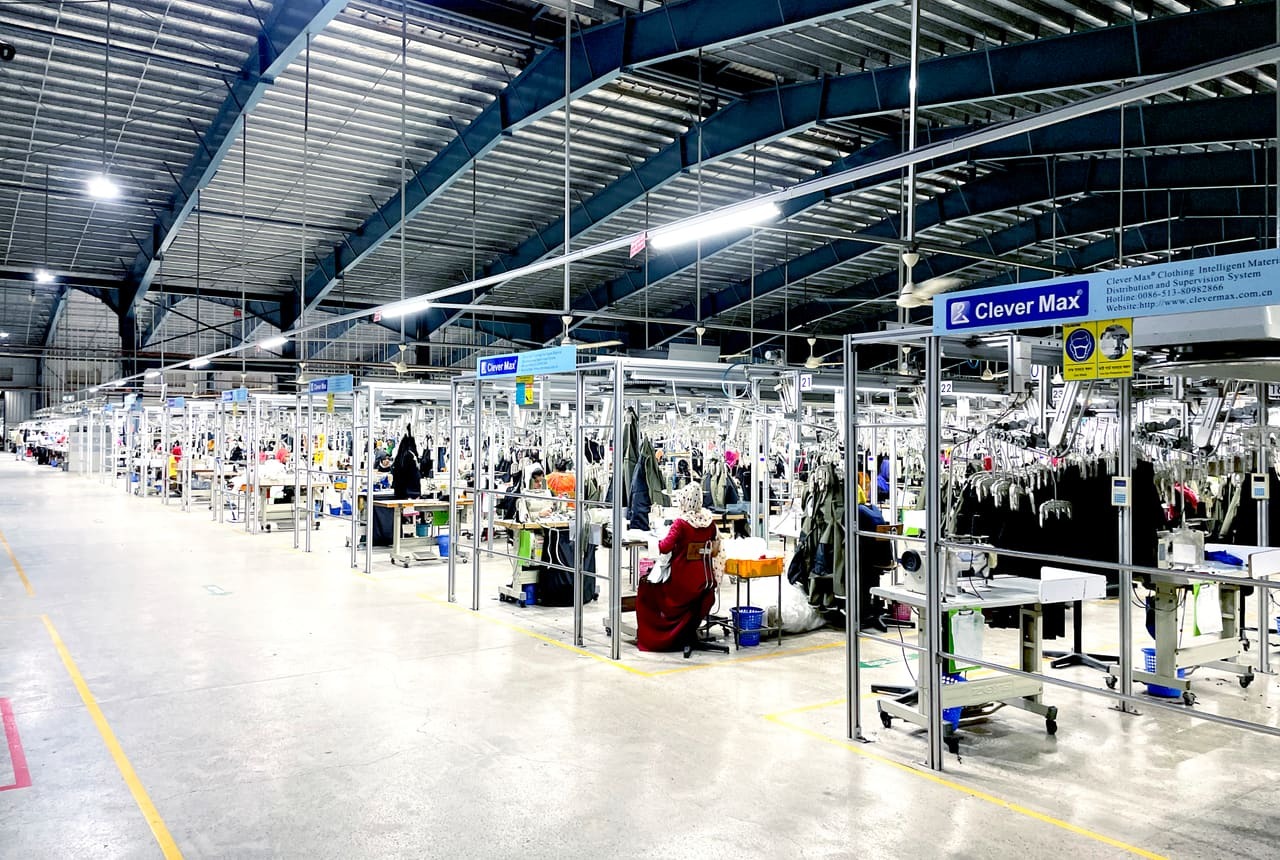
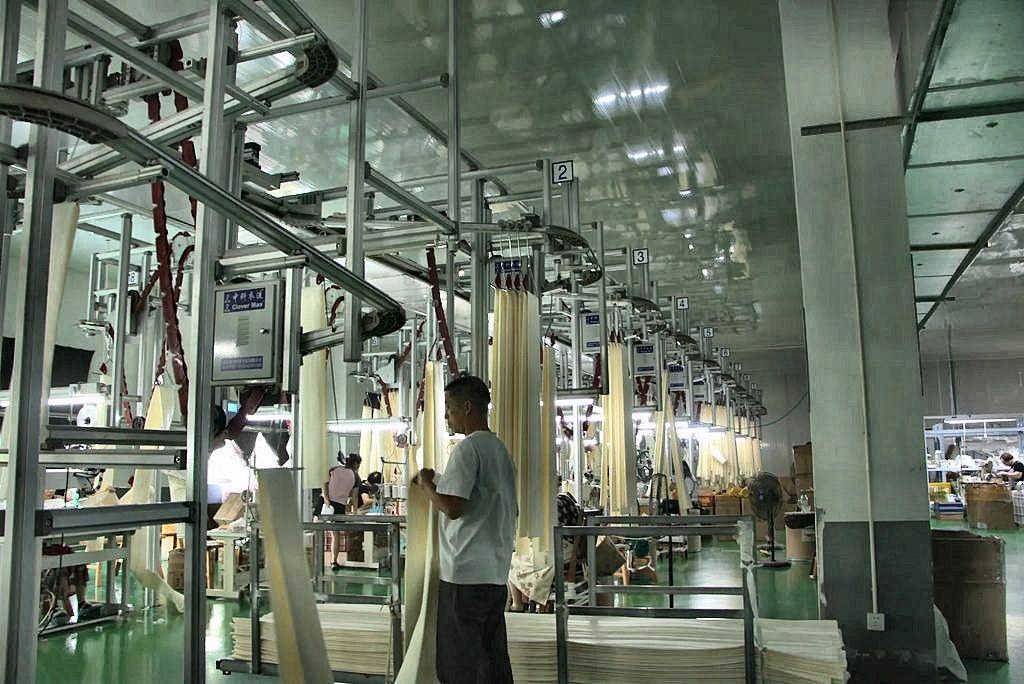
The CleverMax Hanger System uses heavy-payload hangers and reinforced rails to handle felted, woven and laminated filter-bag fabrics without operator strain. RFID-tagged routing gives each batch end-to-end traceability for industrial quality audits, with the audit log produced as a side effect of routing rather than as a separate paper-folder operation. The CleverNode Cutting System on the upstream side handles technical-fabric cutting for the filter-bag media against the same work-order ID.
Live station data smooths the mismatch between fast stitching and slower seaming and pressing stations — supervisors rebalance operators in real time rather than letting work-in-progress pile up between stages. A dedicated durability quality-control station sits on the hanger flow, with the per-piece test result captured against the work-order ID, and the CleverMax Intelligent Warehousing System consolidates finished bags into the correct industrial-customer despatch unit.
What's inside the deployment

Production process with CleverMax
How a typical work order flows from fabric receipt through to finished-goods despatch on this subcategory's line.
- 01
Technical-fabric receipt and cutting: filter media roll-stock is logged into the planning system, and the CleverNode Cutting System cuts each panel against the parent work order with RFID labels applied at the cutting table.
- 02
Multi-layer seaming: hangers carry the cut panels through the multi-layer seaming station, with the seam specification and alignment target on the operator screen.
- 03
Stitching and reinforcement: each filter bag routes through the stitching and reinforcement stations for the specific filtration duty.
- 04
Durability quality control: a dedicated durability test station verifies seam integrity and pressure tolerance, with results captured against the work-order ID and defects routed to a rework lane.
- 05
Per-batch despatch: the warehousing system consolidates finished filter bags into the correct industrial-customer despatch unit, with the per-batch audit log generated automatically.
Reference customers
Why CleverMax for this line
Filter-bag production rewards control software that treats per-batch traceability as a side effect of routing rather than as a separate documentation operation. Because the CleverMax Hanger System already reads every piece at every station, the industrial-customer audit log is produced automatically. The factory does not have to maintain a separate paper-folder operation in parallel with production, which is typically the largest single source of audit-related operational time on a bundle-routed line.
Heavy-fabric handling ergonomics are the second meaningful gain. Filter-bag media does not fold cleanly and is physically demanding to move between stations on a bundle-routed line. The hanger system removes the manual transport step, which has correlated in our customer base with reduced operator turnover on the specialist stitching and seaming stations.
Durability quality control becomes a first-class station rather than an end-of-line operation. The per-piece durability test result is captured against the work-order ID, so defective bags route to rework before they reach the despatch carton. Customers running this configuration generally see end-of-line rejection rates fall into a measurably lower band over the first season, which is usually the metric that justifies the platform on the financial business case in this segment.
Frequently asked questions
Can it handle felted and laminated filter media?
Yes. We size hanger payload and rail geometry to the heaviest media in the customer's product mix at engineering. Felted and laminated filter-bag fabrics are routine configurations for us.
Does the audit log satisfy industrial quality customers?
Yes. Per-piece RFID records link to operator, station, inspection result and timestamps. The export format is compatible with the major industrial-customer quality systems.
Does the hanger system replace our existing stitching machines?
No. The hanger system is an overhead routing layer; your existing stitching, seaming and pressing machines stay as-is. What changes is the routing and traceability layer around them.
Plan your line
Share your SKU mix, station count, and current bottlenecks. Our engineering team will draft a hanger system concept tuned to your factory floor.