
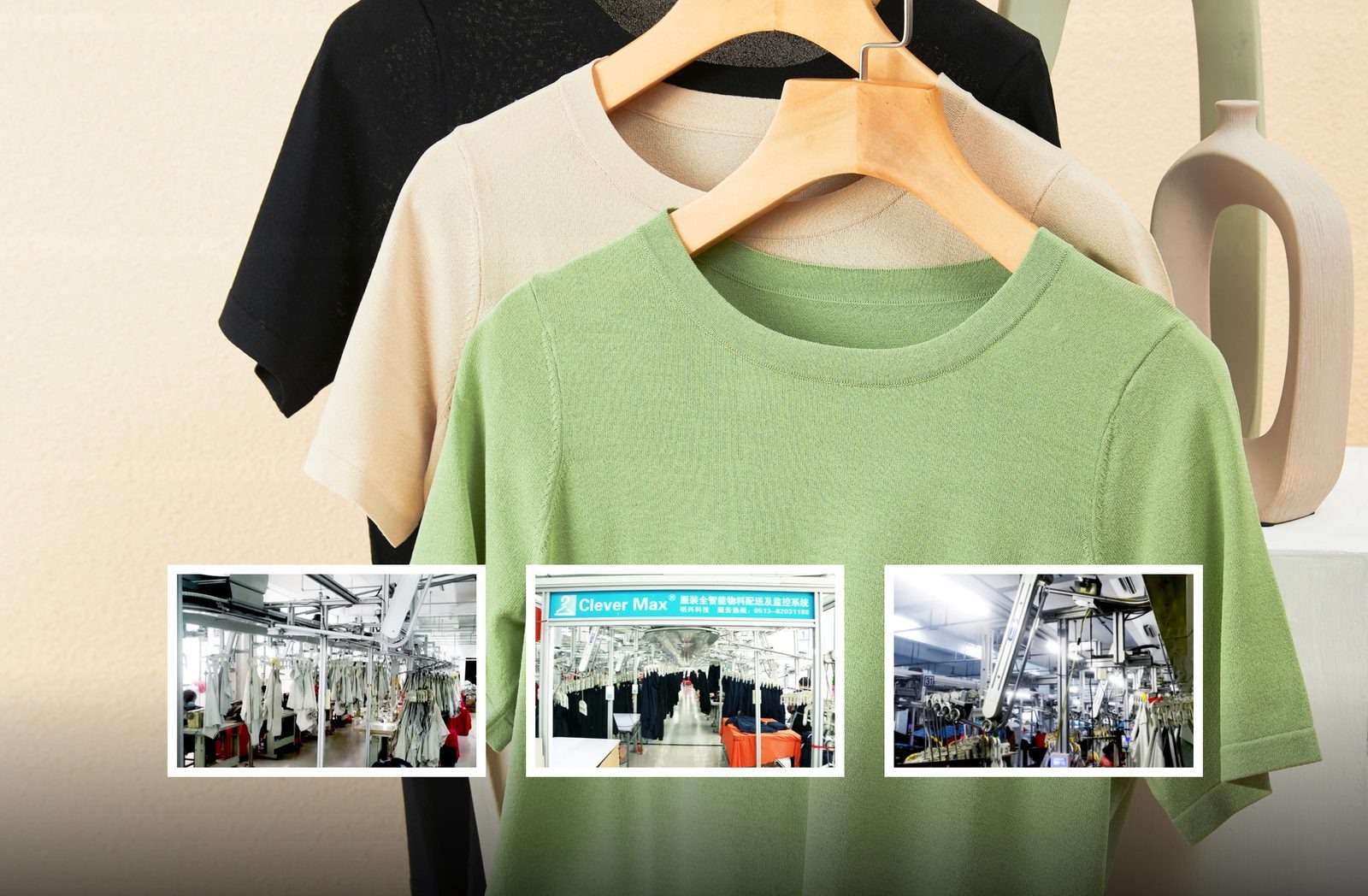
Hanger System for Knitwear & T-shirts
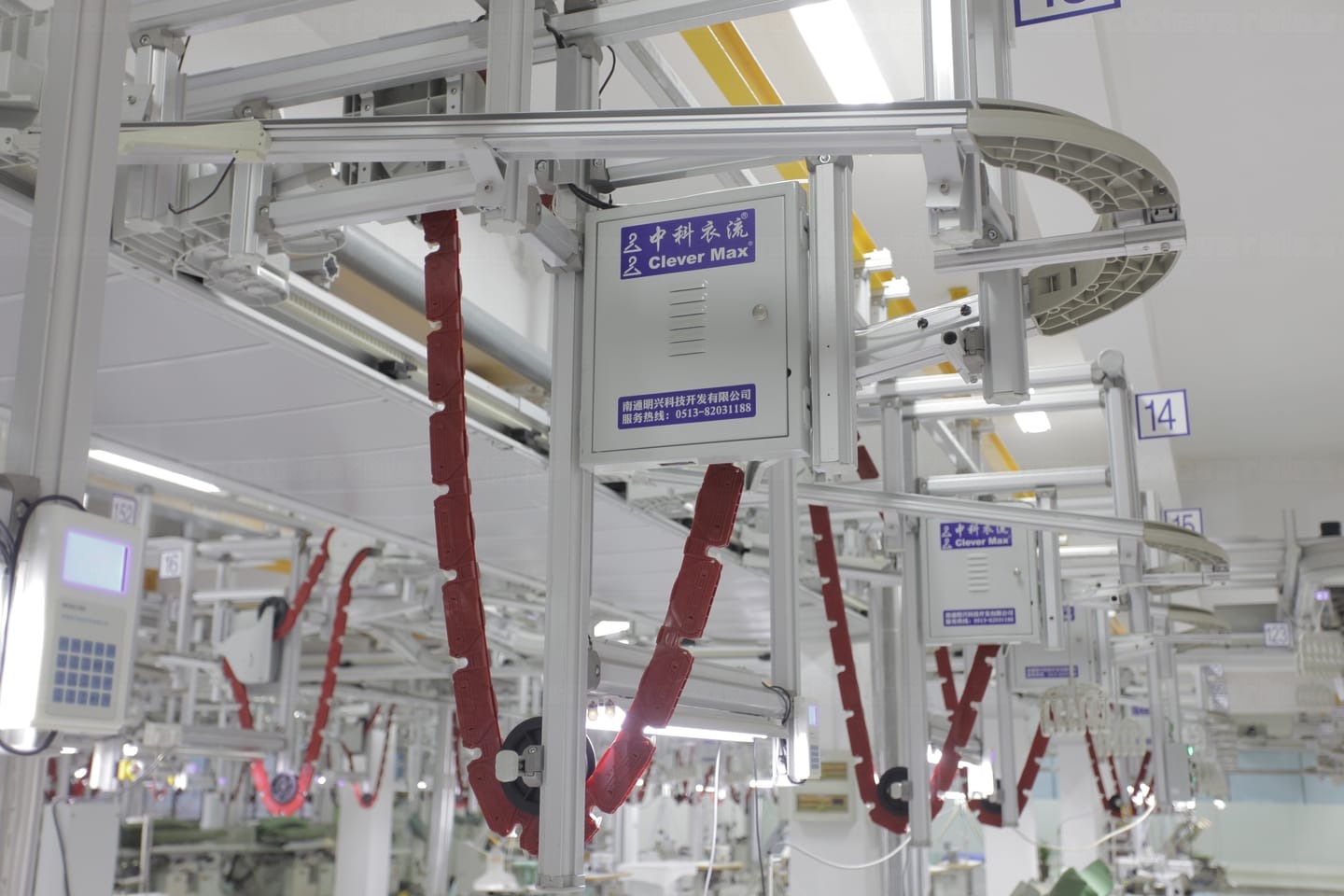
Knitwear and T-shirts are the fastest-cycling apparel line — operations are short, throughput is high, and a small line-balance loss compounds quickly across the day. The CleverMax Hanger System is configured for high-throughput knitwear flow with per-color RFID routing, finished-edge stitching support and inline inspection.
Where production lines lose time
Challenge
Knitwear and T-shirt production cycles in seconds, which makes line balance the dominant economic problem. Short-cycle operations on stretch fabric typically finish faster than operators can hand-bundle, so finished pieces tend to pile up between stations. The natural result on a bundle-routed line is operator idle time, which compounds across a 40-station line into a measurable production loss every shift.
Knitwear lines also typically run multi-colour, multi-size SKU mixes within a single shift. Stretch-fabric handling at the finished-edge stitching station is sensitive to colour and yarn type, and the colour-and-size sort downstream tends to be the slowest, most error-prone manual operation on the floor. Defect inspection on stretch fabric is also harder to do well at end-of-line than in-line.
CleverMax approach
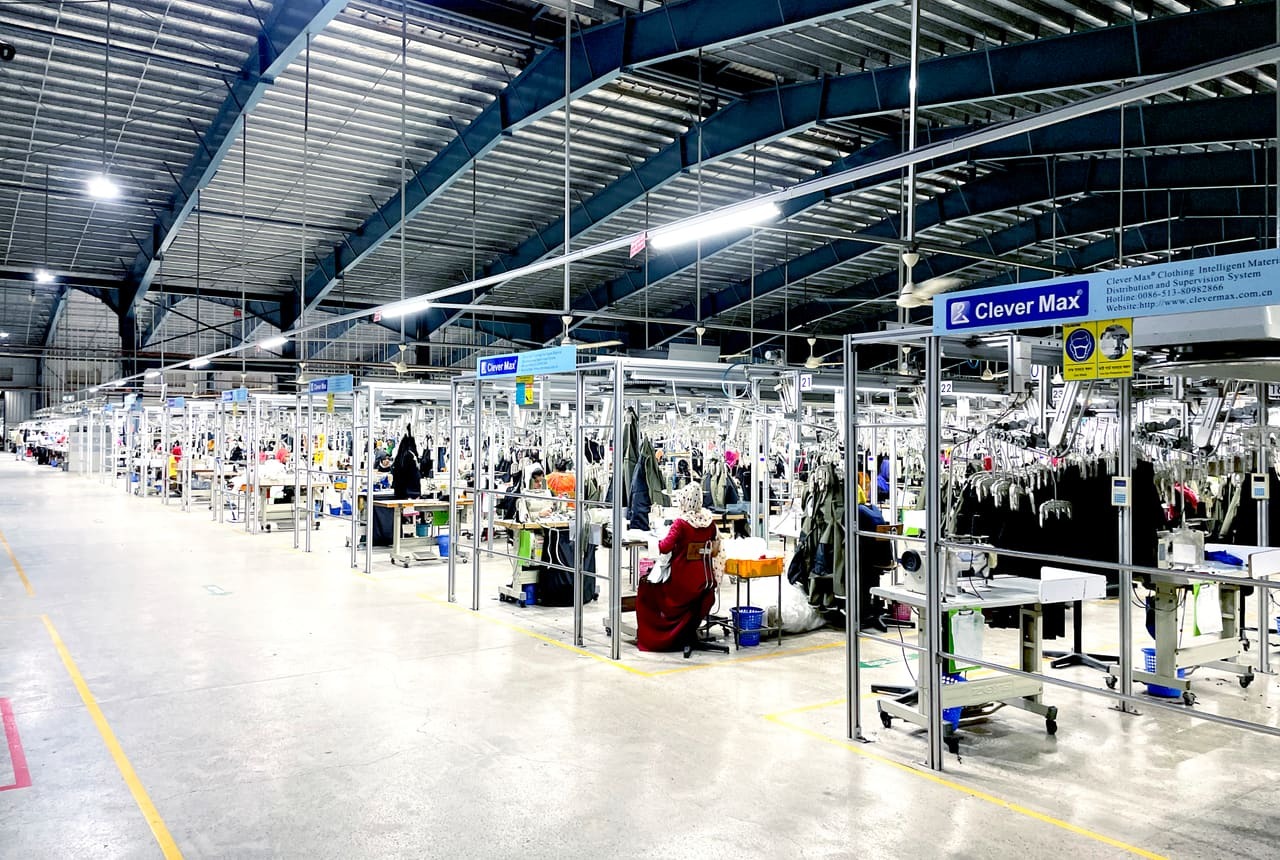
The CleverMax Hanger System buffers finished pieces on overhead rails between sewing and finishing, smoothing the mismatch. Per-piece RFID tagging means colour and size sort happens automatically before packing — operators never sort by hand. The hangers themselves are configured for stretch-fabric handling, so the piece arrives at the finished-edge stitching station without the distortion that bundle transport tends to cause.
Inline inspection stations sit directly on the hanger system flow. Defects are flagged against the RFID tag and routed to a rework lane immediately; the operator-level traceback lets supervisors fix the root cause within the same shift. The CleverNode Cutting System on the upstream side spreads and cuts the stretch-fabric panels for each colour against the same work-order ID, and the CleverMax Intelligent Warehousing System consolidates the finished pieces into the correct multi-colour pack carton.
Production process with CleverMax
How a typical work order flows from fabric receipt through to finished-goods despatch on this subcategory's line.
- 01
Stretch-fabric receipt and cutting: roll-stock for each colour is logged into the planning system, and the CleverNode Cutting System spreads and cuts panels against the parent work order with RFID labels applied at the cutting table.
- 02
Shoulder and side seam stitching: hangers carry each piece through the short-cycle stitching stations in the correct sequence for the style.
- 03
Finished-edge stitching and collar attachment: each piece routes to the appropriate finished-edge stitching station (neck, sleeve, hem) with the colour and yarn-type specification on the operator screen.
- 04
Inline inspection and label sewing: a visual inspection station flags stitch and fabric defects against operator ID, then the piece routes through label-sewing.
- 05
Multi-colour pack and despatch: the warehousing system sorts pieces by colour and size into the correct customer pack carton automatically.
What's inside the deployment
- High-throughput hangers and rails for short-cycle knitwear operations.
- Per-color, per-size RFID sort into packing lanes.
- Inline inspection with operator-level defect traceability.
- Live throughput data and line-balancing for daily SKU-mix tuning.
Why CleverMax for this line
Knitwear lines reward control software that absorbs the cycle-time mismatch between short sewing operations and slower finishing operations. The CleverMax Hanger System acts as a buffered overhead routing layer between the two, so the sewing operators run at their natural cadence and the finishing operators receive a smoothed feed. The net effect on a 40-station knitwear line is typically a measurable lift in line-balance ratio within the first month.
Colour and size sort moves from a manual operation downstream of the line into an automatic operation that happens as a side effect of the routing. Operators stop sorting; the line sorts. On a multi-colour, multi-size T-shirt run that is usually the single largest source of unproductive operator time, so eliminating it is a direct, measurable productivity gain.
Inline inspection on stretch fabric is the third gain. End-of-line inspection on knitwear is historically poor because stretch fabric drapes differently under the inspector's hand than it does on the wearer's body. Inline inspection on the hanger system catches defects while the piece is still naturally draped, which has correlated in our customer base with measurably tighter quality outcomes over the first season.
Frequently asked questions
Can it match our high-volume T-shirt throughput?
Yes. The hanger system is sized to match peak knitwear-line throughput at engineering, with buffer capacity for upstream-downstream mismatch. Reference customers run multi-thousand-piece daily volumes on the same platform.
How does color and size sort work?
Each piece is tagged at hanger pickup with its color and size from the work order. The hanger system routes pieces to the correct packing lane automatically — no manual sort.
Can we run multiple SKUs on the same line at once?
Yes. Per-piece routing means the line handles any SKU mix simultaneously. The control software keeps work orders separated logically even when their pieces are physically intermingled on the rails.
Plan your line
Share your SKU mix, station count, and current bottlenecks. Our engineering team will draft a hanger system concept tuned to your factory floor.