


Hanger System for Automotive Interior
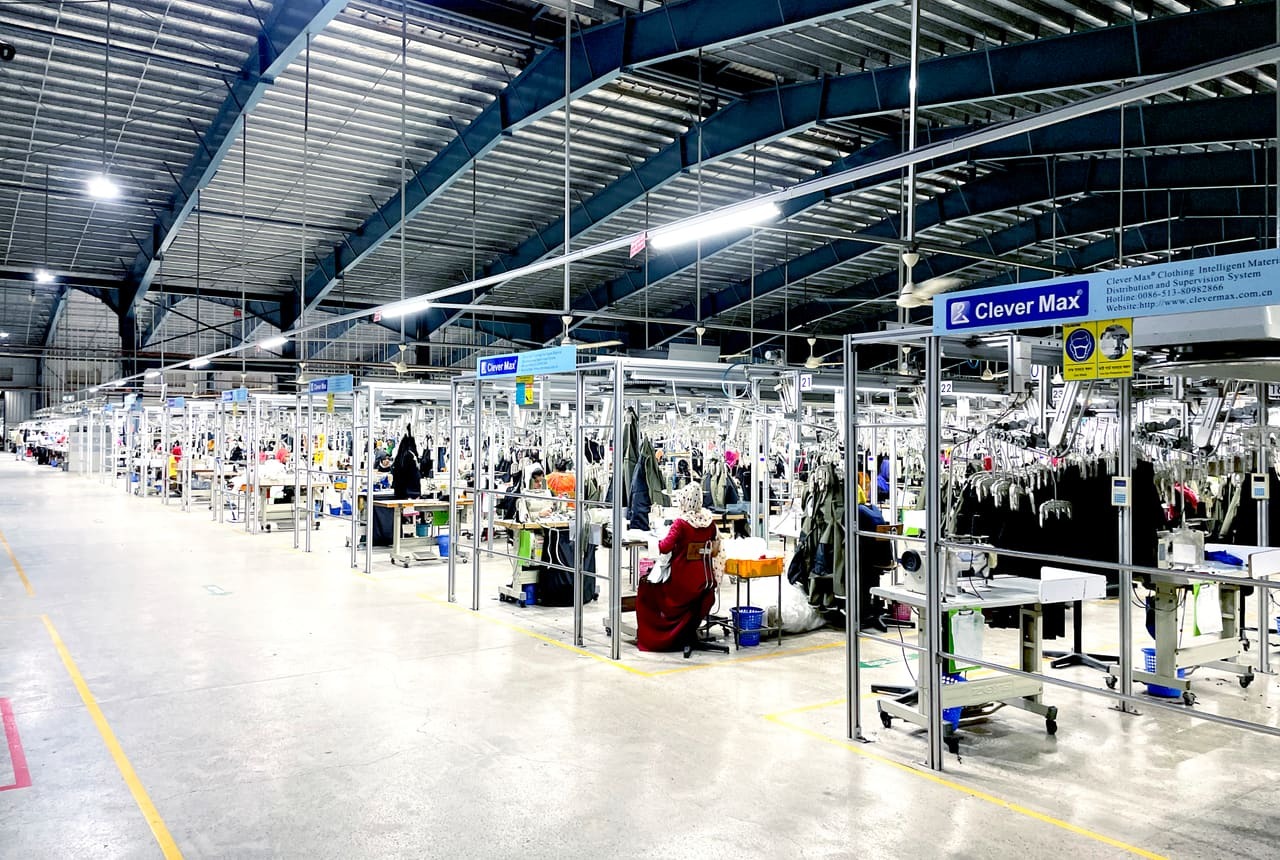
Automotive interior textile (seat covers, headliners, door panels) is a regulated-supply industry — OEMs require batch traceability, defect rates below 100 PPM and strict quality-gate compliance. The CleverMax Hanger System delivers per-batch RFID traceability, pattern-matched cuts, foam-textile bonding integration and the inspection-station data OEMs demand.
Where production lines lose time
Challenge
Automotive interior manufacturing tends to combine pattern-matched cuts (so the seat fabric pattern aligns visually across the bolster, cushion and headrest) with foam-textile bonding operations and a high multi-colour SKU count. A single OEM model line might require eight to twelve colour-and-trim combinations, each with its own batch-traceability requirement and PPAP-grade quality documentation. Manual coordination across that complexity is typically the largest single source of audit-related operational time.
Defect-rate targets in automotive are aggressive — typically below 100 PPM at the finished-component level. Every defect that slips through is a contractual risk, and end-of-line inspection alone tends not to be sufficient. Mid-shift OEM model changes also require fast, error-free reconfiguration of the line, because automotive customers generally do not tolerate delivery slips.
CleverMax approach
The CleverMax Hanger System uses per-batch RFID tagging to give OEM customers the audit log they require: every piece links to operator, station and inspection result with timestamps. Audit becomes a database query rather than a paper-folder operation. The CleverNode Cutting System on the upstream side handles pattern-matched cuts for the seat-fabric panels and pairs them on the cutting table, so the matched-pattern grouping is bound to the parent work order from the start.
Quality-gate inspection stations sit on the hanger flow. The defect-rate target is enforced station-by-station — anything outside spec routes to rework before it leaves the line. The CleverMax Intelligent Warehousing System consolidates per-colour, per-trim finished components into the correct just-in-time despatch container for the OEM customer.
Production process with CleverMax
How a typical work order flows from fabric receipt through to finished-goods despatch on this subcategory's line.
- 01
Pattern-matched cutting: the CleverNode Cutting System spreads multi-colour automotive fabric and cuts each panel with pattern-match pairing against the parent work order, with RFID labels applied at the cutting table.
- 02
Foam-textile bonding: prepared fabric panels route to the foam-bonding station for adhesion to the underlying foam substrate, with the bonding specification on the operator screen.
- 03
Sewing and assembly: bonded panels are sewn into seat covers, headliners or door-panel assemblies with the matched-pattern grouping held in the control software.
- 04
Quality-gate inspection: a PPAP-grade inspection station verifies pattern match, stitch quality and bonding integrity, with defects routed to a rework lane and traceback to operator ID.
- 05
Per-colour despatch: the warehousing system consolidates per-colour, per-trim finished components into the correct just-in-time despatch container for the OEM customer.
What's inside the deployment
- Per-batch RFID traceability sufficient for automotive OEM audit standards.
- Quality-gate stations with per-piece defect logging.
- Fast model-change support — a new OEM SKU enters the line without operator retraining.
- Direct integration with OEM customer MES, ERP, and PPAP systems.
Reference customers
Why CleverMax for this line
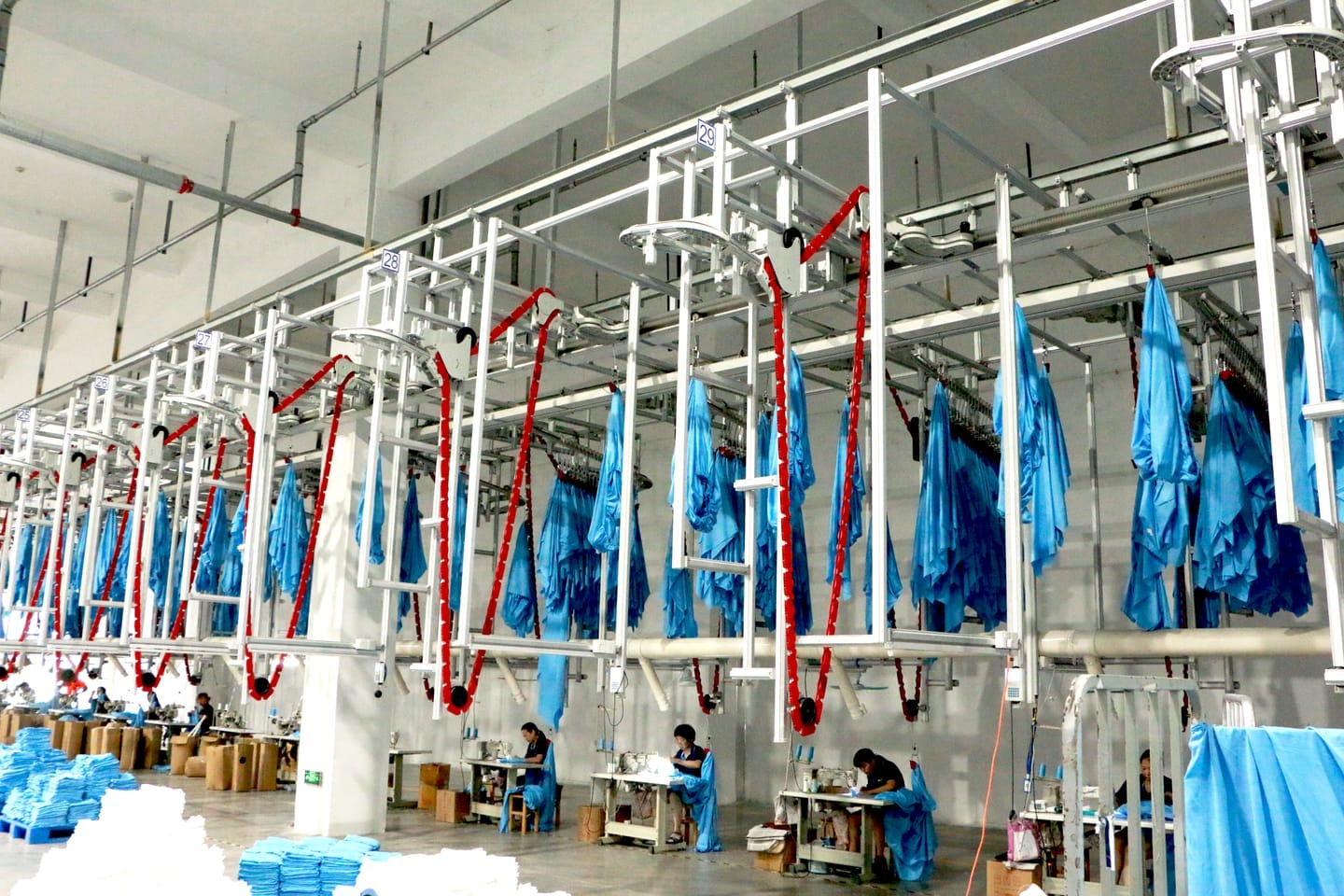
Automotive interior production rewards control software that treats traceability as a side effect of routing rather than as a separate operation. Because the CleverMax Hanger System already reads every piece at every station, the PPAP-grade audit log that OEM customers require is produced automatically — the factory does not have to run a separate documentation operation in parallel with production. Customers running this configuration generally find that audit-related operational time falls into a measurably lower band within the first quarter.
Pattern-matched cutting and foam-textile bonding are the two most error-sensitive operations on the line, and the hanger system materially improves both. Pattern matching is held in the cutting-room control software and preserved through routing, so the matched-pattern grouping does not drift between the cutting table and the assembly station. Foam-textile bonding receives a smoothed upstream feed, so the bonding-station operator works against a consistent piece arrival rather than against the natural batchiness of upstream sewing.
Multi-colour SKU handling is the third meaningful gain. Automotive interior lines historically throttle to manage the cost of colour changeovers, and per-piece routing collapses that changeover cost into the routing software. The line takes the additional complexity on the routing side rather than on the operator side, which is the practical reason JIT despatch to OEMs has become operationally cheaper for CleverMax customers in this segment.
Frequently asked questions
Does the audit log satisfy automotive OEM requirements?
Yes. The per-piece audit log records operator, station, inspection result and timestamp. The export format is compatible with the major OEM PPAP and quality systems.
Can the line meet sub-100-PPM defect rates?
Defect-rate performance comes from the inspection-station configuration, not the hanger system itself. The hanger system provides the routing and traceability layer; we work with you to design inspection-station coverage that supports your target.
Does it support PPAP-style sample runs and full production runs on the same line?
Yes. The hanger system has no minimum batch size — a 5-piece PPAP sample run and a 10,000-piece production run flow through the same control layer with the same audit log.
Plan your line
Share your SKU mix, station count, and current bottlenecks. Our engineering team will draft a hanger system concept tuned to your factory floor.