

Sewing equipment exports up 28.87% in Q1: Southeast Asia is building factories, China is supplying them
China exported 935 million USD of sewing machinery in Q1 2025, up 28.87% year on year, in the same quarter apparel exports fell 1.9%. Vietnam grew 62.32%, India 46.36%, Pakistan 52.08%, and Belt and Road markets took 73.06% of the total. Overseas capacity is expanding, the equipment it needs comes from China, and what advantage remains for factories in China is not in the machinery.
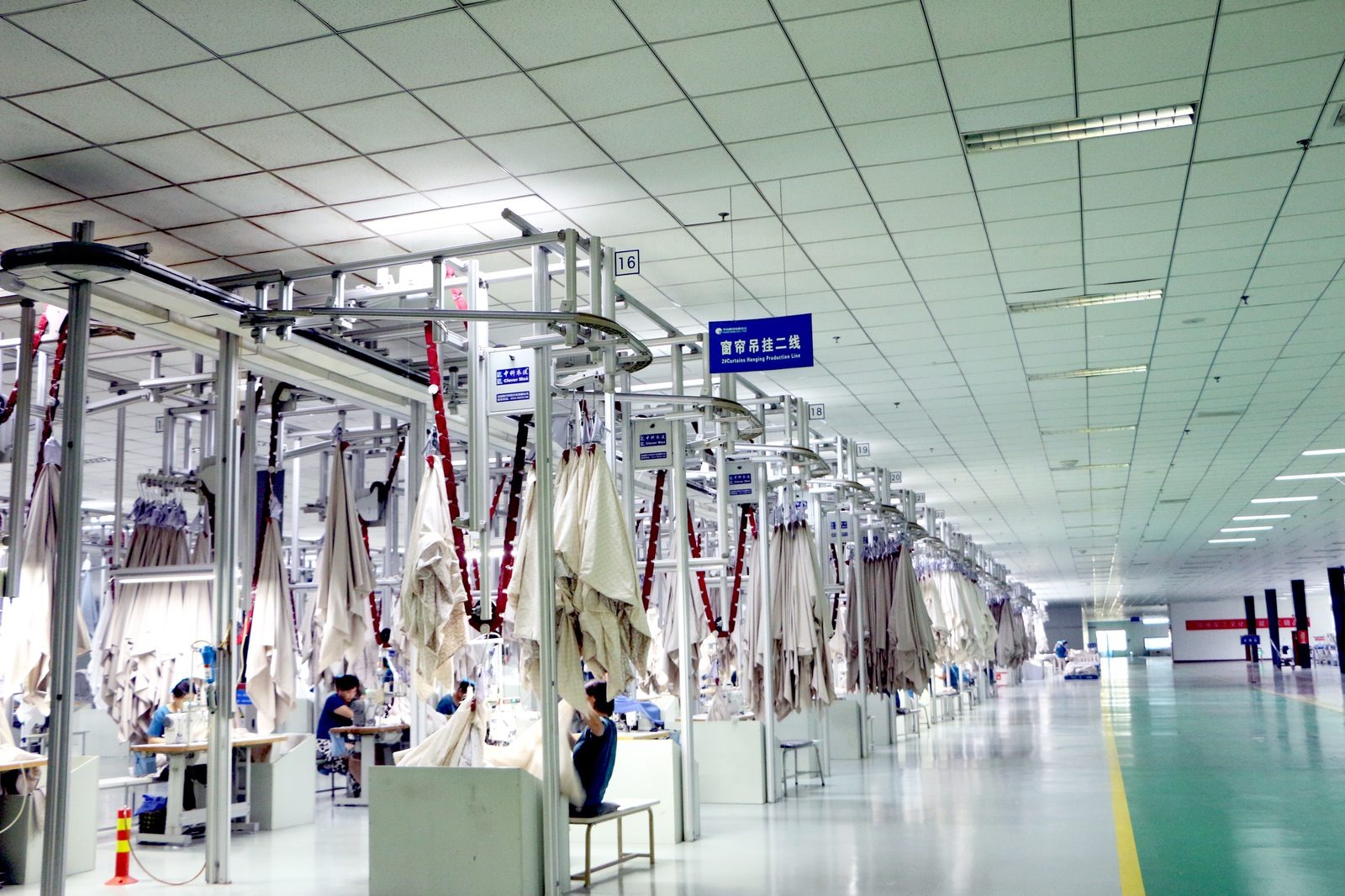
In Q1 2025, China's sewing machinery industry exported 935 million USD, up 28.87% year on year.
In the same quarter, China's apparel exports fell 1.9%. Garment exports down, equipment exports up by nearly a third: two figures pointing opposite ways that describe two sides of one movement. The orders for clothes are leaving, and the money spent on equipping the lines that will make them leaves alongside, except that on the equipment side the money comes back to China.
Which markets grew fastest
By country, the leading growth rates in Q1:
Vietnam: +62.32%
Pakistan: +52.08%
India: +46.36%
Belt and Road markets together accounted for 73.06% of total exports.
All three are destinations absorbing apparel manufacturing capacity. Equipment imports rising by half in a year is not the volume you get from replacing machines here and there, it is what lines being built and expanded in quantity looks like from the supplier's side.
Factories built abroad, equipped from China
A production line needs three things: a building, workers and equipment. The first two can be sourced locally, with buildings often going up faster than they would in China and labour available to hire. The equipment is the item that cannot be manufactured locally at short notice.
The equipment chain in garment manufacturing, covering sewing machines, cutting tables, hanger conveying, pressing, inspection and packing, took China decades to build out as a complete supporting industry. A new plant needs a whole matched line rather than individual machines, and China remains the only place where a whole matched line can be sourced at once. The faster capacity expands overseas, the stronger the demand for Chinese equipment.
Which is why sewing equipment exports could grow by nearly a third in the very quarter that apparel exports were under pressure. The countries absorbing capacity are becoming customers of Chinese equipment manufacturing.
What it means for factories in China
There are two ways to read this data.
One is pressure. Overseas capacity is forming quickly and doing so with equipment of comparable standard, since it is the equipment China has just shipped them. The equipment gap is closing, and an advantage built on a generational lead in machinery is no longer secure.
The other is opportunity. Equipment can be bought, whereas the ability to organise a production line cannot. Given the same hanger system, how the process path is laid out, how multiple styles run merged, how the line ramps for peak season and how the data is actually used all accumulate over years. A new factory that has taken delivery of equipment is still some distance from using it well, and it is a distance factories in China have spent more than a decade covering.
That is where they stand: not winning on equipment, but on the efficiency with which equipment is used.
Where CleverMax sits
Since its founding in 2003, CleverMax has done one thing, which is to connect equipment and software into a line that runs.
The CleverMax hanger system is the core of it. Its RFID identification came out of the industry-academia partnership formed with the CAS Institute of Software in 2005, and records the location and dwell time of every piece automatically with no manual entry. What a barcode cannot do is work without a person, which is why a busy shift produces missed scans, a missed scan breaks the chain, and merged lines stop being distinguishable at all. Removing that person from the chain is the part a competitor cannot copy by copying the rail.
The YunDao cloud MES platform feeds that data back into scheduling, closing the loop from equipment to software, and the solutions span the full chain across cutting, sewing, hanger conveying, intelligent warehousing, sorting and packing. We do not sell single machines. We deliver the efficiency of a whole line.
Wherever the factory is
Within this wave of overseas expansion, CleverMax serves factories in China as well as Chinese-invested plants abroad and local manufacturers.
A new building has the advantage of carrying no legacy. The constraints that make a retrofit difficult, insufficient ceiling height, irregular column spacing, inadequate electrical provision and material flow that was settled years ago, can all be designed out while the plans are still on paper, which allows the floor and its services to be laid out around an automated line from the beginning.
That advantage has an expiry date. Once the building goes up, ceiling height and column spacing are fixed, and any automated line installed later has to route around the structure that exists, with every extra metre of detour costing money. The planning sequence for a new plant should therefore be reversed: settle how the line will run, then settle how the building gets built. If your project is still at the drawing stage you are in the only window where the structure can still change, so send us your product categories, your target output and the conditions on the site, and CleverMax can work backwards from the line to a set of building requirements.
Sources
Every factual claim above traces to one of the following. Where a source is offline — a certificate, a printed publication — we name it without a link.
- [1] 中国缝制机械协会《2025年一季度缝制机械行业出口分析》 2025-05-06 (offline source) accessed 2026-08-27 · Trade press