
YunDao cloud MES: the release that turned CleverMax from equipment supplier into a full solution provider
In 2011 CleverMax released the YunDao cloud manufacturing execution system. A hanger system settles how the data comes into being. An MES settles what happens to it once it exists, which is the half that had been missing while reports arrived a day late. Joining the two is what moved CleverMax from selling equipment to planning a whole plant.
In 2011 CleverMax released the YunDao cloud manufacturing execution system.
It came out of a question customers kept repeating. As more hanger systems went in, owners could see that the system was accumulating numbers, and that the numbers were sitting there doing nothing, so they asked what they were supposed to do with them.
The data was already there, and nobody was deciding anything with it
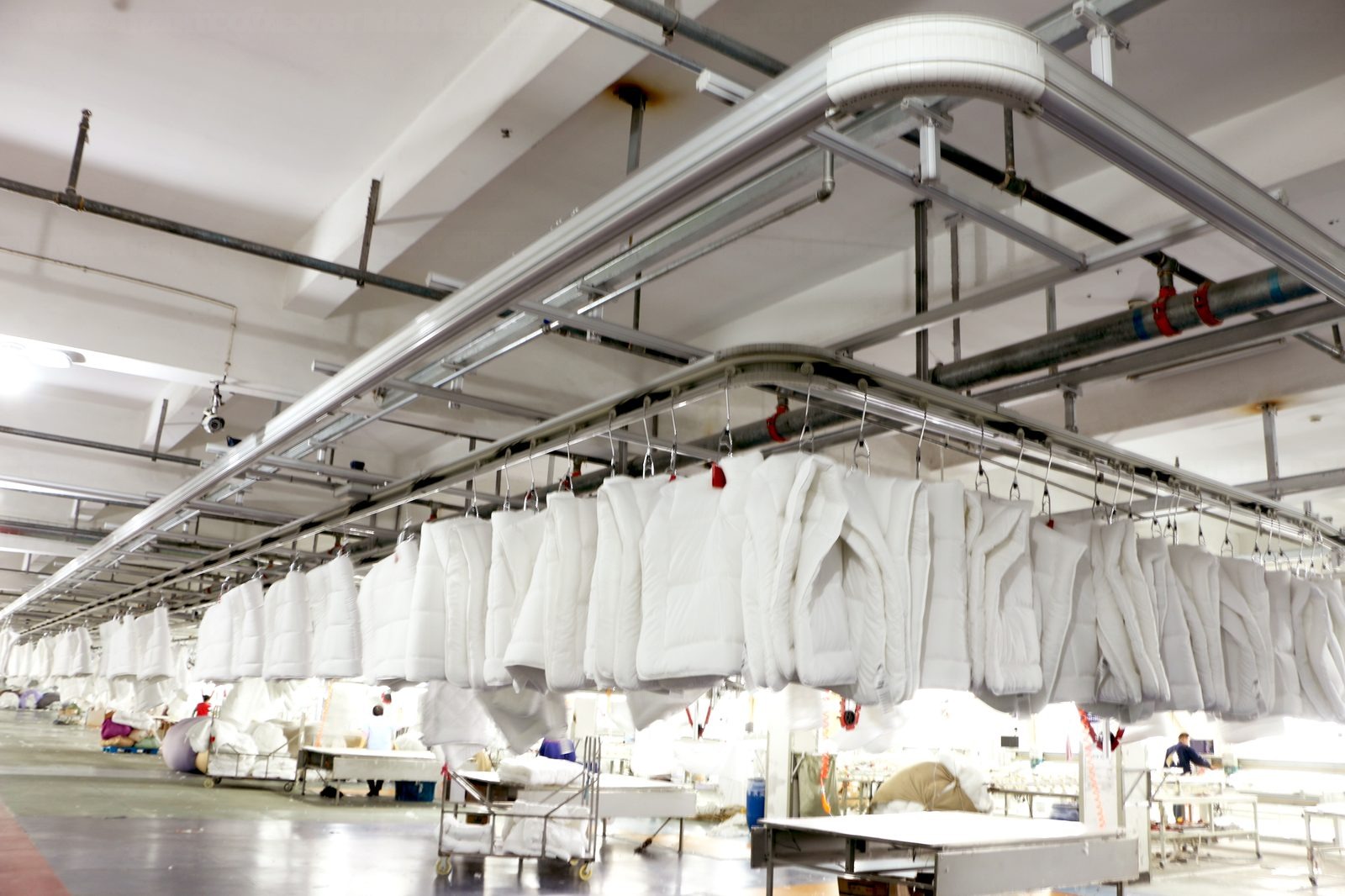
Since the approach set out in the 2006 RFID patent, a hanger system had been producing data without being asked to, because every carrier holds a tag and every station entrance holds a reader, so the location of a piece of work and the time it has spent waiting are recorded as the carrier goes past, with nobody keying anything in.
Then what.
The early answer was to export it overnight, build a report and put the report on a manager's desk in the morning, which beat paper tickets by a wide margin and was still, unavoidably, history. A station blocked for two hours at three in the afternoon reaches the manager the next day, by which time the only available response is a sigh, the capacity having gone.
Data has to arrive while the decision it bears on is still open, and a printed report cannot do that because it is a day slower than the floor by construction. What an MES adds is that missing stretch, feeding captured data back into scheduling so that a blockage is known about while it is still happening.
Three things YunDao does, each worked backwards from something the floor worries about
Nothing here started as a feature looking for a use. It started with what garment plants complain about daily.
Production plan execution. An order reaching the floor is broken into process tasks and the tasks are assigned to stations. That once rested on a supervisor's experience and a printed schedule, where a single change meant recalculating the whole sheet and then walking round telling everybody, which is why by the end of a week nobody would touch it. Working from live progress data, a change to one order disturbs only the stations that order runs through.
Process scheduling. Which station is blocked and which is standing idle can be read straight off the data, and unremarkable as that sounds, it is the precondition for acting at all, since the alternative is waiting until a pile is large enough to notice from across the floor, half a day too late.
Workshop data management. Work-in-progress counts, completion by operation, dwell time per piece: information that used to live on paper tickets and in people's heads is now something that can be queried and worked with. An owner wanting to know which line ran most efficiently this month, or which operation generates the most rework, has it on opening the screen instead of waiting a week for somebody to tally it.
Why it was a cloud product in 2011
The cloud part was about a threshold, and the threshold was what kept small and mid-sized Chinese plants out.
Putting in an information system then meant building a server room, buying hardware and employing someone to keep it alive. For a plant of a few hundred people the arithmetic never closed, so owners heard the quote and concluded that this sort of thing belonged to large groups.
Cloud deployment removed the threshold rather than lowering it. A factory with an internet connection could use the system, without capital spent on a server room first and without a head added to look after one piece of software. What that saved was not only the money but the waiting for a budget cycle in which to spend it. It is what let an MES reach plants that could never have justified the investment.
The CAS Institute of Software carried the work on
In 2013 the CAS Institute of Software and CleverMax jointly funded Jiangsu YunDao Information Technology specifically to keep developing the platform. The same industry-academia thread runs back to the partnership formed in 2005, with RFID as its first stretch and the cloud platform as its second.
When China Home Textile Brand Network reported on the CleverMax home-textile system in 2015, this was the platform they were describing. Once the data is on a cloud platform, lines at several sites can be scheduled off one sheet, and the hooks are in place for the made-to-order work that came later.
Two halves, and neither is worth much alone
In hindsight 2011 fixed the shape of everything that followed. The hanger system makes the data appear by itself. The MES turns it into decisions.
Remove either half and the other loses most of its value.
A hanger system with no software is a floor full of sensors nobody reads. Material moves more smoothly than it did, while management stays exactly what it was, with the supervisor still walking the floor to find out who is blocked and who is idle, and the gains stopping at the handling step.
Software with no hanger system still depends on people keying data in, and hand-keyed data manages to be late, wrong and incomplete at once, so however good the algorithm, it is running on nothing. These projects fail the same way every time. Three months after go-live the operators stop filling things in, the data dries up, and the project is quietly dropped.
CleverMax covers cutting, sewing, hanger transport, intelligent storage, sorting and packing as one chain, keeping the record unbroken from loading to dispatch, for exactly that reason.
Settle where the data comes from before shopping for a system
The first question for a plant considering a shop-floor system is not what the software does. It is where the data comes from and who enters it, because every item on a feature list has to stand on a set of numbers that are actually correct, and a long list standing on bad numbers is still hollow.
CleverMax arrived at this from the other direction. The hanger system was capturing data on customers' floors first. Five years of watching that data go unused is what produced the MES, and that order was the right way round. A plant already running a hanger line has the capture layer in place and needs only to route it back into scheduling. A plant still working off paper tickets should solve capture first, and leave the system until after.
Sources
Every factual claim above traces to one of the following. Where a source is offline — a certificate, a printed publication — we name it without a link.
- [1] 南通明兴科技开发有限公司 企业发展历程(公司资料) 2011 (offline source) accessed 2026-08-10 · Trade press
- [2] 品牌家纺网《明兴科技:传统家纺"搭上"云平台》 2015-09-01 accessed 2026-08-10 · Trade press